Give your AI agents a memory they can build together
DejaView is the shared knowledge graph where you and your agents learn, remember, and connect — together.
Every session, your agent forgets everything. DejaView fixes that.
The problem
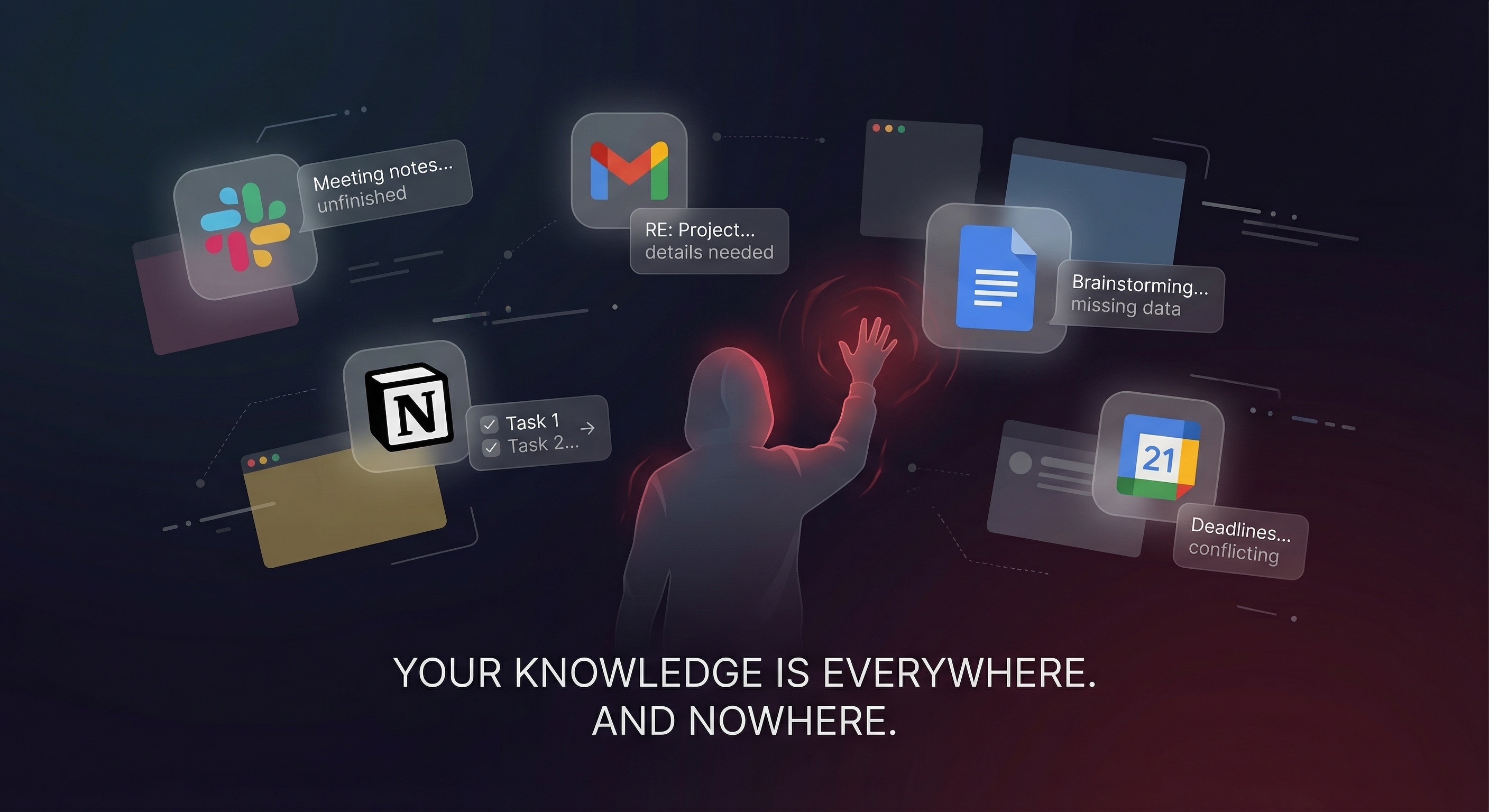
Your AI starts fresh every single time.
Every conversation, your agent wakes up with zero memory. You have been talking to it for months — but it still does not know who you are.
🍋
Every chat session, your agent forgets everything. Projects, decisions, context, team members — gone. Blank slate, every single time.
🔁
You repeat yourself constantly. Who you are, what you are building, who is involved. You have typed "I am working on a startup called..." more times than you can count.
😲
Your agents cannot share what they have learned. Your coding agent does not know what your research agent discovered. Knowledge stays trapped in individual sessions.
🗂
The knowledge lives in chat logs no one reads. Buried in scrollback, impossible to search, impossible to connect. Effectively lost.
The difference
What if your agent could remember?
Here is what the first message of a session looks like — with and without DejaView.
Without DejaView
🤖 AI Agent
"Hi! I'm your AI assistant. How can I help you today?"
Blank slate. Every time.
Your agent has no idea who you are, what you are building, or what you decided last week. You are starting from zero. Again.
With DejaView
🤖 AI Agent
"Hey! Loaded your context. Picking up on Project Phoenix — last session you decided to use microservices for scaling. You are meeting Jordan (potential partner from the conference) on Thursday. Want to continue where we left off?"
Picks up where you left off.
Agent loads your graph on startup. Knows your projects, your team, your decisions, your preferences. Zero re-explaining.
How it works
Your knowledge graph builds itself.
You just talk to your agent. Behind the scenes, your graph grows automatically — and any agent can tap into it instantly.
1
You talk normally
No special commands. No forms to fill. Just have a conversation with your agent like you always do.
"Let's work on Project Phoenix. Sam is leading it, we're going with FastAPI."
2
Your agent writes to DejaView
As your agent learns things, it writes them to your graph automatically. Typed, structured, permanently connected.
Alex -[joined]-> TechCorp as CTO
Decided -[use]-> FastAPI for speed
Jordan -[met_at]-> Conference
3
Any agent loads it instantly
Next session — or a brand new specialized agent — loads your full context in one API call. No re-explaining.
GET /v1/entities/Alex
-> CTO at TechCorp
-> Working on: Project Phoenix
-> Partner: Jordan
4
You explore it too
Browse, search, and visualize your graph yourself. Rediscover decisions, trace connections, find context you forgot you had.
> Who is connected to TechCorp?
-> Alex (CTO), Jordan (partner)
-> Project Phoenix, RivalCo
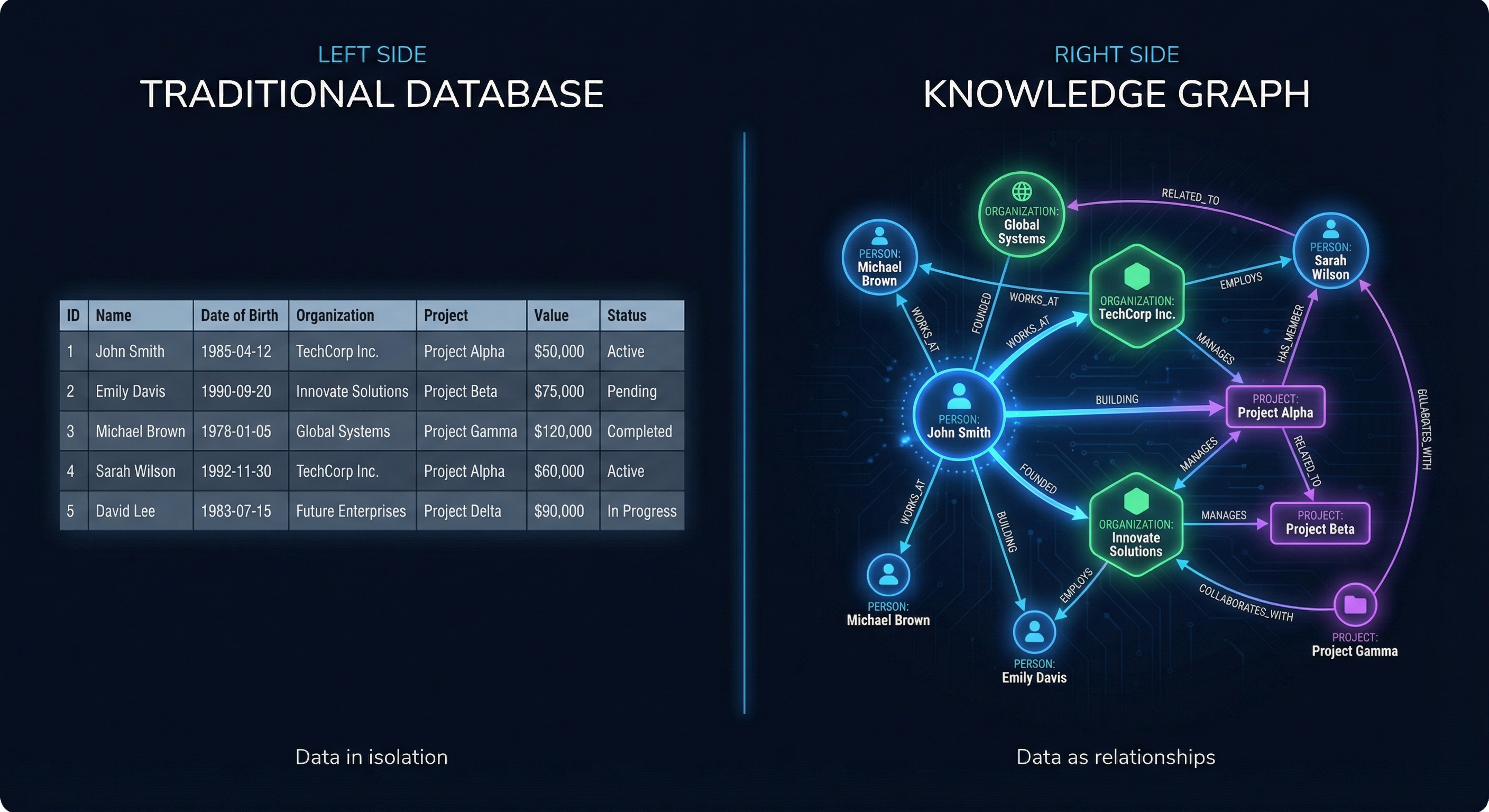
Chat logs vs knowledge graph — same information, completely different power. Connections reveal what flat lists never could.
Built for the agentic future
An API your agents can actually use.
DejaView is designed from the ground up to be the memory layer for agentic systems — not just a notes app with an API bolted on.
🔗
Any agent can read and writeSimple REST API. Bearer token auth. Works with any AI framework — LangChain, AutoGPT, custom agents, you name it.
🔄
Typed relationshipsNot just "related to" — but DECIDED, KNOWS, WORKS_AT, DEPENDS_ON. Real semantic meaning agents can reason about.
🔒
Multi-tenant & privateEach user has their own isolated graph. Your agents' knowledge never bleeds into anyone else's.
💬
Query in natural languageAsk your graph anything. "Who do I know at TechCorp?" "What decisions have we made about Project Phoenix?"
🌐
Built-in graph explorerVisualize your knowledge graph interactively. See how everything connects at a glance.
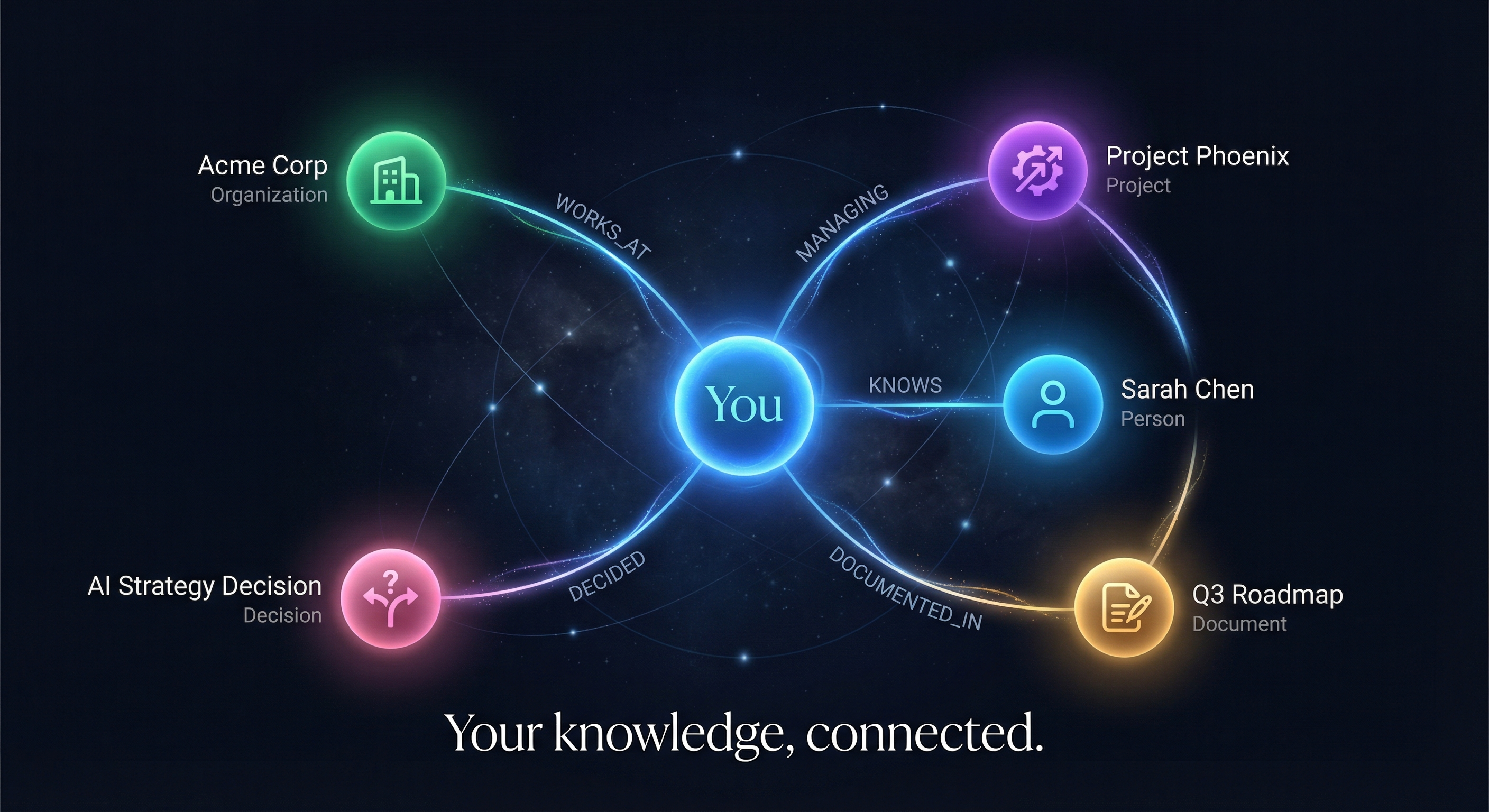
The DejaView graph explorer — your world, fully connected.
Use cases
Your agents, finally working with you.
What changes when your agents actually remember things.
🤖
Your coding agent remembers your architecture decisions so it stops suggesting patterns you have already rejected.
🧠
Your research agent builds a knowledge map across every paper it reads — connecting authors, concepts, and citations automatically.
💼
Your business agent tracks every contact, company, and opportunity without you having to manage a CRM.
🔗
Spin up a new specialized agent and it instantly knows your full context — goals, decisions, team, history. Zero onboarding.
👤
You search your own graph to rediscover decisions, connections, and insights from months ago — instantly surfaced.
⚡
Share context between agents — your writing agent knows what your research agent learned. They build on each other.
For developers
Two API calls. That's it.
Integrate DejaView into any agent in minutes. Write what you learn. Read it next time.
agent-memory.sh
# Your agent learns something -- writes it to DejaViewcurl-X POSThttps://api.dejaview.io/v1/facts \
-H"Authorization: Bearer YOUR_KEY" \
-H"Content-Type: application/json" \
-d'{
"facts": [
{"subject": "Alex", "predicate": "decided", "object": "use microservices for scaling"},
{"subject": "TechCorp", "predicate": "competes_with", "object": "RivalCo"},
{"subject": "Jordan", "predicate": "introduced_by", "object": "Alex"}
]
}'# Next agent session -- loads full context instantlycurlhttps://api.dejaview.io/v1/entities/Alex \
-H"Authorization: Bearer YOUR_KEY"# Response: everything your agents ever learned about Alex
# {
# "entity": "Alex",
# "facts": [
# {"predicate": "decided", "object": "use microservices for scaling"},
# {"predicate": "joined", "object": "TechCorp as CTO"},
# {"predicate": "introduced", "object": "Jordan"},
# ...
# ]
# }
Integrations
Plug in anywhere.
Native MCP support, Python SDK, REST API, and tool schemas your agents can load directly. Works with Claude, GPT, Cursor, Windsurf, and any agent framework.
# Load the tool schema into any agent frameworkimport httpx, json
schema = httpx.get("https://dejaview.io/tools.json").json()
# Use with LangChain, AutoGen, or any OpenAI function-calling framework
tools = schema["tools"] # list of OpenAI-compatible tool definitions
Machine-readable schema at dejaview.io/tools.json — load it directly into your agent framework.
🤖 Claude Desktop
⚡ Cursor
🌊 Windsurf
🐍 LangChain
🔧 AutoGen
🦙 Any OpenAI-compatible agent
Interactive Demo
See the graph think.
Hover over nodes. Watch connections light up. This is how your knowledge looks when it's alive.
Search by connection, not just keywords.
Ask DejaView a question and get a connected subgraph — not a list of documents.
> What do I know about Project Atlas?
Found 23 connections across 4 people, 7 decisions, 3 meetings, and 9 documents — spanning 6 weeks of context.
Pricing
Start free. Scale when ready.
Open source at the core. Pay only when you want hosted convenience or API access.